Run Run Deals: Coupons & Codes
- 4.4
- Rating
- 10.00K
- Installs
- Free
- Price

 Analysis by App-foxy
I approached Run Run Deals: Coupons & Codes as a practical shopping companion rather than a place to browse for entertainment. Its main promise is simple: help me find verified coupon codes, promotional codes, and daily deals before I complete an order. After using it in that role, my view is that it works best as a quick checking step in a purchase routine, especially when I already know what I want to buy. It is less convincing as a complete shopping destination because the value depends on finding a useful offer at the right moment.
That distinction matters. A coupon app cannot make an unsuitable product worthwhile, and it cannot guarantee that every code will apply to every basket. What it can do is reduce the small but frustrating effort of searching for discounts across different websites. RunRunDeals, the developer behind the app, has built this Android shopping tool around that narrow task. I like the focus, although users who expect a full marketplace, price-history service, or personalized shopping assistant will probably want something broader.
How Run Run Deals fits into everyday shopping
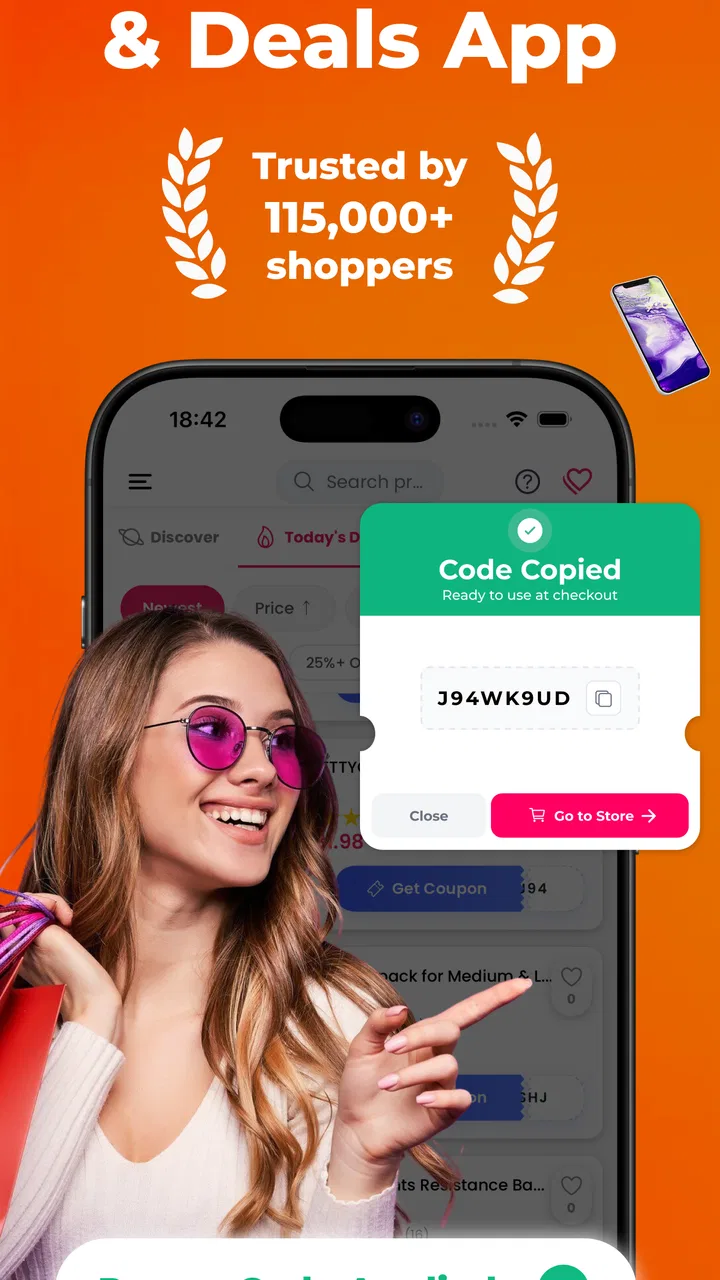
The app is free to install and is aimed at everyone, which makes the initial commitment very low. It belongs in the same general space as coupon aggregators and deal-finding services, but its emphasis is on codes and current promotions rather than replacing the retailer’s checkout. In my experience, that makes the most sensible workflow straightforward: choose the store, look through the available offers, copy a suitable code, and test it in the retailer’s cart before paying.
You May Also Like

 AccuWeather: Weather Radar
AccuWeather Review: A Quick, Clear Forecast for Everyday Decisions
For everyday plans, the best forecast is the one you can understand quickly. AccuWeather makes rain timing, radar, and local conditions easy to act on, with a few trade-offs.

 Hill Climb Racing
Why Hill Climb Racing Still Turns Crashes Into One More Run
A tiny car, a bumpy hill and one more upgrade: Hill Climb Racing keeps resurfacing because its simple chaos makes every near-miss feel personal.

 AliExpress - Shopping App
AliExpress Makes Global Shopping Feel Personal, but Shoppers Bear the Risk
AliExpress turns a global marketplace into a pocket-sized discovery engine. Its reach is useful, its shopping loop compelling, and its trade-offs easy to miss.

 Lords Mobile: Kingdom Wars
Lords Mobile Is a Kingdom-Building Routine, Not a Quick Match
A case-by-case verdict on the building, battles, device demands, and social commitments that make Lords Mobile rewarding for some players and exhausting for others.

 PDF Scanner app - TapScanner
TapScanner Makes Paperwork Easier to Capture, Check, and Share
TapScanner makes scanning with a phone feel less like a rescue operation and more like a dependable step in getting work done. Its capture tools are useful, though not flawless.

 Block Blast!
 Shows How Much a Puzzle Game Can Leave Out
A quiet grid game shows why puzzle players increasingly value instant clarity, repeatable skill and low-pressure play—and where the genre still needs to catch up.
More From Our News Desk
View All News


That workflow is more useful when I begin with a specific purchase. For example, if I am ordering household supplies after work, I can check Run Run Deals before submitting the order instead of opening several search results and guessing which coupon pages are still relevant. The app does not remove the need to read the offer conditions, but it can make the search less scattered. The few minutes saved are most noticeable on ordinary purchases where I would otherwise skip looking for a discount altogether.
The app has a 4.4 average from around 480 ratings, with roughly 184 written reviews. Those figures suggest that many users find the basic idea worthwhile, though they should not be treated as a promise that every listed promotion will work for every retailer or product. Coupon services naturally have a moving target: merchants change conditions, codes expire, and some offers apply only to selected categories or new customers.
Run Run Deals has been available since July 3, 2020, and the current release is version 4.9.7. It supports Android 7.0 and later, so it can suit people using older compatible phones rather than requiring a recent device. Its install base is over 10 thousand, which gives it the feel of a smaller, focused utility instead of a huge shopping platform. I see that as both a strength and a reason to keep expectations realistic.
The strongest part is the last-minute discount check
The most convincing use case is the moment immediately before checkout. I already have an item in mind, I know which retailer I am using, and I want one quick attempt at lowering the total. In that situation, a focused coupon app is more convenient than manually searching for phrases such as “current code” or “free delivery” and then sorting through pages that may mix old promotions with active ones.
I also find the distinction between coupon codes and daily deals useful. A code is something I actively enter, while a deal may already be reflected in the retailer’s offer or may require opening a particular promotion. Keeping both types of saving in one shopping-oriented tool gives me two ways to reduce the cost: search for a code when I have a full-price basket, or look for a deal before deciding which product or retailer to choose.
A good habit is to compare the final basket total, not the headline percentage. A smaller code with no minimum spend may beat a larger-looking promotion that requires adding an unnecessary item. I would also check whether delivery, taxes, exclusions, or a maximum discount change the result. Run Run Deals can help me discover the possibility of saving, but the retailer’s checkout remains the final authority.
That is an important practical limitation, but it also clarifies where the app provides value. I do not use it as proof that a discount will apply. I use it as a shortlist of offers worth testing. This approach prevents a common mistake with coupon apps: spending more time chasing a code than the discount is worth.
A useful routine for planned and repeat purchases
The app becomes more helpful when I make it part of a repeatable routine instead of opening it randomly. Before placing an online order, I can check the retailer and scan the available promotions. If one offer has a minimum purchase, I compare that threshold with what I was already planning to buy. If it requires a particular payment method, membership, or product category, I treat that condition as part of the real price rather than as a bonus.
For recurring purchases, I would avoid assuming that the same code will remain useful. A promotion that worked on one order may be limited to a first purchase, a specific campaign, or a short validity window. The better workflow is to check again each time, compare the actual total, and remove any extra item that was added only to qualify for a discount. This is one of the less obvious benefits of having a dedicated place to check: it encourages a deliberate pause before checkout.
Daily deals are best approached with even more discipline. They can broaden the search beyond the exact product I had planned to buy, but that can also encourage impulse spending. I would use them to compare alternatives within a need I already have, not as a reason to create a new need. In other words, the app is strongest when it supports a shopping decision I have already made, not when it makes the decision for me.
Another practical tip is to read the full offer wording before copying anything. A code can look attractive while applying only to selected brands, a particular order size, or a limited customer group. If the app presents several choices, I would test the one that matches my basket most closely rather than automatically choosing the biggest advertised saving. That small change in behavior can make the difference between a genuine discount and a wasted checkout attempt.
Where the experience can become frustrating
The central weakness is inherent to coupon discovery: an offer can be shown as relevant yet fail at checkout. Even when a code is listed as verified, verification does not mean it applies universally. Retailer rules, product exclusions, account status, and timing can all affect the result. I would therefore avoid judging the app solely by whether every code succeeds. Still, repeated failed attempts would make the tool feel like an extra step rather than a shortcut.
There is also a trade-off between browsing deals and staying focused. A long list of promotions can be useful when I am flexible about where to buy, but it is less useful when I need a particular product from a particular store. In that situation, irrelevant or conditional offers create noise. The app’s value depends on how quickly I can identify a promotion that matches my actual basket.
Users who want deep price comparison may find the experience limited. A coupon service and a price-tracking tool answer different questions. Run Run Deals helps me ask, “Is there a code or deal I can try here?” It does not replace the broader question, “Is this retailer offering the best overall price?” I would still compare the product’s total cost, delivery terms, and return conditions elsewhere when the purchase is expensive or non-urgent.
The same applies to people who prefer one retailer’s own loyalty program. A store’s membership discount, points system, or automatic promotion may be more reliable than an external code. In those cases, the app can still be a quick extra check, but it should not distract from a benefit that is already built into the retailer account. The best saving is not always the most visible coupon.
In-app purchases range from $2.99 to $99.99 per item. Because the app is free to install, I would pay close attention to any purchase prompt and decide whether the benefit is meaningful for my shopping habits. Occasional shoppers may have little reason to spend beyond the free experience, while frequent deal hunters may consider additional paid options differently. I would not treat an in-app purchase as necessary for the basic decision of whether the app is useful.
Who should use it, and who should skip it
I think Run Run Deals is a good fit for people who regularly shop online and often forget to check for a code before paying. It is especially suitable for someone who wants a simple, focused place to look rather than maintaining a collection of coupon websites. It can also help budget-conscious households build a small pause into routine purchases: check the store, compare the conditions, test the code, then decide whether the final total is worthwhile.
It is less suitable for shoppers who rarely buy online, who already have a dependable retailer loyalty system, or who dislike manually testing promotions. If a failed code feels more annoying than the possible saving feels rewarding, the app may not earn a permanent place on the phone. The same is true for shoppers who expect automatic savings without copying, entering, or checking anything at the retailer’s checkout.
I would also be cautious about using it for urgent purchases. If I need an item immediately, I would not delay the order for an uncertain promotion. For a high-value purchase, I would use the app as one part of a wider comparison, not as the only source of price information. For a flexible purchase, however, checking daily deals can be worthwhile because I can change the retailer or timing if the offer genuinely improves the total.
Compared with searching the web manually, the app’s advantage is convenience and concentration. Compared with retailer-specific apps, its advantage is that it can support a broader coupon-checking habit rather than keeping me inside one store. Compared with full shopping comparison services, its advantage is a narrower, quicker purpose. None of these alternatives is automatically better; the right choice depends on whether I need a code, a store comparison, or a complete buying journey.
Small decisions that make the app more effective
I would use the app with a clear order value in mind. Before selecting a promotion, I would note the basket total and ask whether the offer reduces the price without encouraging unnecessary additions. If a code has a threshold just above my current total, I would compare the cost of reaching it with the saving instead of assuming that qualifying is sensible. This prevents the familiar coupon trap of spending extra to “save.”
I would also keep a simple distinction between a successful code and a promising listing. The first is confirmed by the final retailer total; the second is only an option worth trying. That mindset makes the app more useful and less disappointing. It also means I can move on quickly when an offer fails instead of repeatedly refreshing or trying several near-identical codes.
For daily deals, I would compare the discounted product with the normal alternatives I would have considered anyway. A deal is valuable only when the product meets my needs and the retailer’s total cost remains competitive. This is where my own judgment matters more than the promotion label. Run Run Deals can surface an opportunity, but it cannot decide whether the item is durable, suitable, or necessary.
Finally, I would check the app before checkout rather than after placing an order. That sounds obvious, but it is the difference between a usable discount and a missed opportunity. I would also avoid assuming that a promotion will be available later simply because it appears today. Coupon information changes, so the best time to use a relevant offer is while I am ready to complete the purchase.
My verdict after weighing the convenience against the friction
My overall impression is positive but deliberately practical. Run Run Deals is not a replacement for a marketplace, a retailer account, or a complete price-comparison service. It is a focused shopping utility that can make coupon checking less scattered. Its strongest contribution is encouraging me to take one informed step before checkout, particularly when I am already committed to an online purchase.
The experience is most rewarding when I treat the app as a filter for possibilities rather than a guarantee of savings. I still need to read conditions, test the offer, and judge the final total. That extra responsibility is the main friction, but it is also normal for this category. No coupon tool can remove the retailer’s restrictions or make every promotion suitable for every basket.
For a free Android app with an Everyone age rating and support for Android 7.0 and later, it is easy to try without changing the way I shop. I would recommend it to frequent online shoppers who want a quick pre-check and are comfortable verifying the result at checkout. I would skip it if I wanted automatic discounts, extensive product comparisons, or a single store’s loyalty benefits. My recommendation is simple: use it as a smart final check, not as the entire shopping strategy.
That is where Run Run Deals earns its place. It does not need to transform shopping to be useful; it needs to help me avoid paying full price when a relevant offer is available. When I keep my expectations grounded and compare the real final total, the app provides a convenient extra layer of savings without pretending to replace common sense.
FAQs for Run Run Deals: Coupons & Codes
01What is Run Run Deals: Coupons & Codes?
Run Run Deals: Coupons & Codes is a shopping app designed to help users discover discounts, promotional offers, coupon codes, and online deals from different retailers. After browsing the available sections, users can search for offers by store or category, open a deal, and follow the instructions provided to redeem it. The usefulness of each offer may depend on the retailer, location, and expiration date.
02How do I use a coupon or promotional code in Run Run Deals?
To use an offer, select a deal that interests you and read its conditions carefully. Some coupons may be copied directly, while others may require tapping a button that redirects you to the retailer’s website or app. At checkout, paste or enter the code in the designated promotional-code field. Always confirm that the discount has been applied before completing your purchase.
03Are all deals and coupon codes in the app guaranteed to work?
No coupon app can guarantee that every listed offer will remain active indefinitely. Retailers can change terms, end promotions early, limit availability, or restrict codes to specific products and customers. Run Run Deals can help you find potential savings, but you should verify the expiration date, minimum purchase requirements, eligible items, and other restrictions before relying on a deal.
04Is Run Run Deals: Coupons & Codes free to download and use?
The app is generally intended to let users browse deals without paying for access to the basic coupon-finding features. However, availability of premium functions, advertising, or other in-app conditions may vary depending on the current version and platform. The purchases themselves are made through the participating retailer, so review the final price, shipping fees, and store policies before confirming an order.
05What should I check before downloading and using the app?
Before downloading Run Run Deals: Coupons & Codes, check that your Android or iOS device meets the app’s current requirements and that you are installing the official version from a trusted store. Review the requested permissions and privacy information, especially if the app redirects you to external shopping websites. It is also wise to compare prices independently, since a coupon does not always represent the lowest available offer.
Pros
- Quickly find coupons and promo codes for popular online stores.
- Discounts cover fashion
- electronics
- travel
- food
- and other categories.
- Simple interface makes browsing and searching deals straightforward.
- Regularly updated offers can help reduce the final checkout price.
- Useful savings companion for shoppers who compare deals before buying.
Cons
- Some coupon codes may be expired or fail at checkout.
- Many offers redirect to external retailer websites or apps.
- Deal availability and discounts can vary by location and account.
- The app may include advertisements or promotional content.
- Savings often require minimum purchases or specific terms and conditions.

Run Run Deals: Coupons & Codes
Gallery